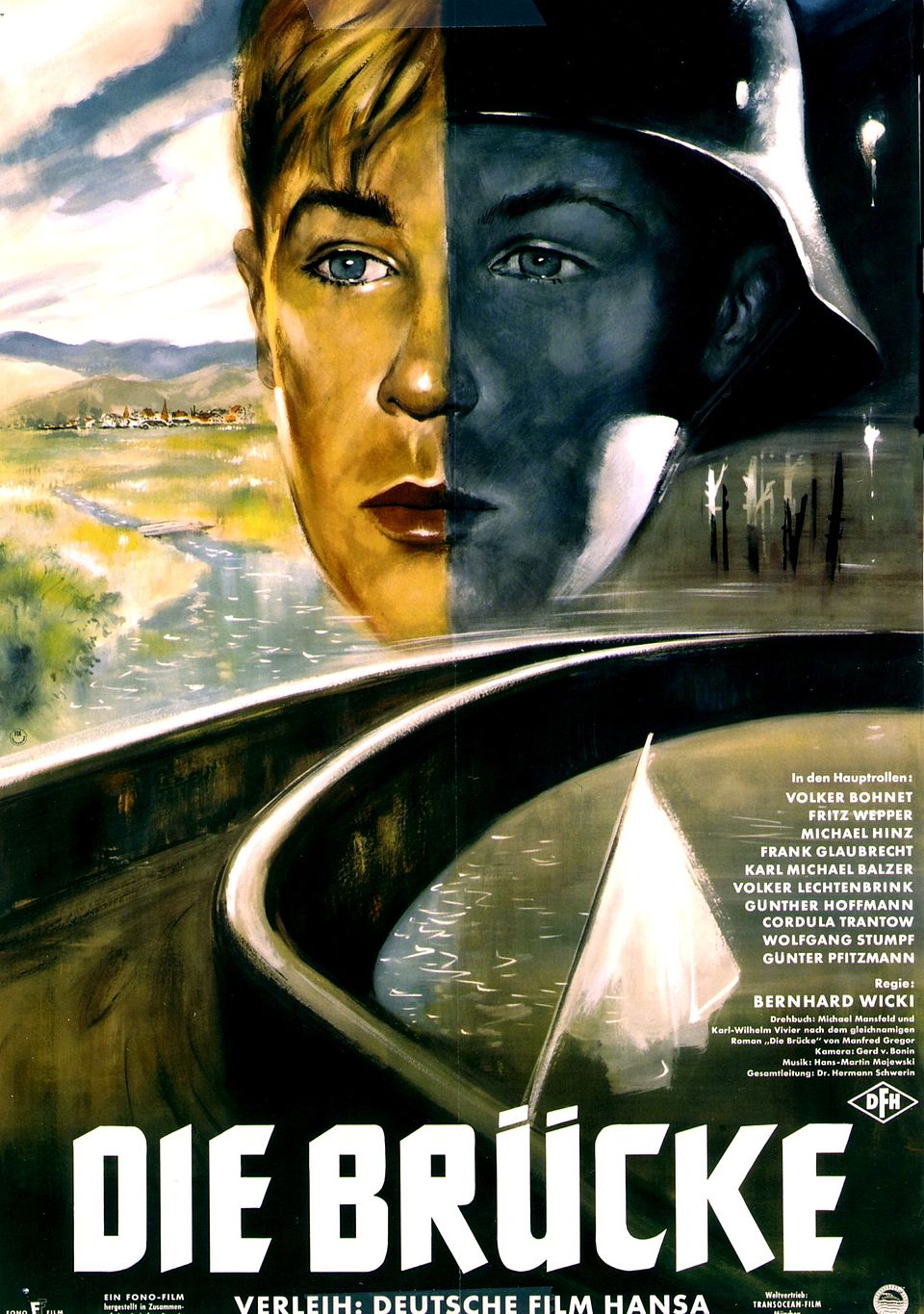
A Timeless Reflection on War's Folly: Discovering the Impact of Die Brücke
When discussions turn to the most potent and unflinching anti-war films ever made,
Die Brücke (German for "The Bridge") frequently stands as a towering example. Released in 1959, this West German masterpiece, directed by the Austrian filmmaker Bernhard Wicki, plunges viewers into the devastating final days of Nazi Germany through the eyes of seven impressionable teenage boys. More than just a historical drama, the
die brucke film is a harrowing exploration of lost innocence, the futility of war, and the catastrophic power of propaganda, earning it international acclaim, including the Golden Globe Award for Best Foreign Language Film and the National Board of Review Award for Best Foreign Language Film.
Its release was particularly poignant for West Germany. With the Bundeswehr (Germany's new armed forces) only recently established in 1955 and conscription reinstated in 1956, the film served as a stark, introspective mirror reflecting on the nation's recent militaristic past and the profound human cost. Unlike many post-war narratives that might have glossed over or romanticized the conflict,
Die Brücke faced the grim reality of Nazi defeat head-on, delivering a powerful and uncomfortable truth that resonated deeply with a generation still grappling with the wounds of World War II. It remains a vital cinematic document, dissecting the psychological and physical toll of war with a realism that continues to captivate and disturb audiences worldwide.
From Page to Screen: The Genesis of Die Brücke
The powerful narrative of the
die brucke film finds its roots in the 1958 novel of the same name by journalist and writer Gregor Dorfmeister, who published it under the pseudonym Manfred Gregor. What makes Dorfmeister's story particularly compelling is its foundation in reality; the author himself was a young veteran who experienced a similar, harrowing situation during the war's twilight. This personal connection imbued the source material with an authenticity that Wicki masterfully translated to the screen.
Wicki's adaptation captures the essence of a small, unnamed German town where the distant rumble of war slowly, inexorably, encroaches upon daily life. While bombs occasionally fall and shortages become common, the conflict initially feels remote, almost abstract. The film opens with scenes of carefree school days, where boys like Albert, Klaus, Jürgen, Walter, Karl, Sigi, and Hans enjoy the simple pleasures of youth under the guidance of a conscientious teacher. This idyllic setting, however, is a fragile veneer, destined to be shattered by the harsh realities of the collapsing Third Reich. The narrative deliberately juxtaposes the boys' innocent pursuits – learning languages, building a boat – with the terrifying fate awaiting them. When the draft notices arrive, signaling their inevitable call-up to the rapidly approaching American front, their teacher's visible distress underscores the gravity of their situation, a stark contrast to the boys' initial perception of it as a grand adventure.
Innocence Lost: The Haunting Narrative of Seven Boys
The core of the
die brucke film's enduring power lies in its portrayal of these seven 15-year-old boys. Their transition from school uniforms to military fatigues is shockingly abrupt, stripping away their childhood dreams and thrusting them into a man's war. We witness their parents' desperate attempts to comprehend, protect, or even send their sons away to safety, highlighting the universal parental anguish in times of conflict. Personal dramas further underscore the chaos: one boy's heartbreak over a discovered infidelity involving his father creates a bitter farewell, while another's father, a local Party leader, is preoccupied with his own escape.
Despite their lack of training and equipment, the boys are imbued with the zealous, often misguided, ideology of the crumbling regime. They represent a spectrum of personalities: the stoic officer candidate from a military family, the fervent fanatic dedicated to "the Fatherland," the free-spirited lover of life, and the earnest, naive idealist. Their initial deployment as a squad under the command of a veteran soldier, who understands their plight and tries to protect them, offers a brief glimmer of hope. However, as the American front advances rapidly towards their village, the boys are reassigned a seemingly vital mission: to defend a small, strategically insignificant bridge over a river.
The devastating irony here is palpable: the bridge is, in fact, slated for demolition by their own demolition squad once the fleeing German army has crossed. This detail is known to their superior officers, many of whom question the wisdom of sacrificing these young lives for a lost cause. Yet, fueled by boyish heroism and deeply ingrained nationalist fervor, the boys eagerly accept the challenge, even using their old treehouse as a lookout. This segment of the
Youth on The Bridge: A True Story of WWII Sacrifice perfectly encapsulates the tragic and brutal loss of innocence that defines this powerful
Die Brücke (1959): West Germany's Powerful Anti-War Classic.
A Bridge to Understanding: Themes, Impact, and Legacy
The
die brucke film is a masterclass in thematic depth, offering profound insights into the human condition during wartime. At its heart, it's a searing indictment of the senselessness of conflict and the devastating impact of propaganda on young, impressionable minds. The film meticulously builds the narrative, contrasting the boys' initial naive idealism with the horrifying reality of combat. We see how their understanding of heroism, shaped by years of indoctrination, clashes violently with the brutal, chaotic, and utterly unglamorous nature of war.
Bernhard Wicki’s direction is a key element in the film’s lasting impact. He employs a raw, almost documentary-style realism, using hand-held cameras and close-ups to immerse the audience in the chaos and terror of the battlefield. The tension is palpable, the violence visceral, and the psychological toll on the young protagonists is conveyed with unflinching honesty. Wicki doesn't shy away from depicting the moral ambiguities and the desperate choices made in the fog of war, showcasing both the resilience and the fragility of the human spirit. The sound design, often understated, accentuates the shock of gunfire and the silence of despair.
The enduring legacy of
Die Brücke lies not only in its cinematic achievements but also in its timeless message. It serves as a powerful cautionary tale about the dangers of unchecked nationalism, the exploitation of youth for political ends, and the universal tragedy of war. It compels viewers to confront uncomfortable truths about historical events and the often-ignored suffering of those caught in the crossfire.
Why Die Brücke Resonates Today: Insights for Viewers
Even decades after its release, the
die brucke film continues to be relevant, offering crucial lessons for contemporary audiences. For those seeking to understand the psychological impact of war, particularly on young soldiers, it provides invaluable insight.
*
Challenging Heroism: The film forces viewers to question traditional notions of battlefield heroism. Is dying for a lost cause truly heroic, or is it a tragic waste? This offers a potent discussion point for students of history and film alike.
*
The Price of Ideology: Observe how the boys' unwavering belief in "the Fatherland" blinds them to the futility of their mission. This is a stark reminder of how powerful ideologies can override logic and self-preservation.
*
Empathy and Perspective: The film encourages empathy for all those caught in the machinery of war, regardless of their nationality. It humanizes the "enemy" and highlights the shared suffering.
When watching
Die Brücke, pay close attention to Wicki's masterful pacing, the development of each boy's character, and the gradual erosion of their innocence. It is a film that demands reflection and offers a window into a painful chapter of history, reminding us of the profound costs of conflict.
Conclusion
Die Brücke stands as an unparalleled cinematic achievement, a brutal yet profoundly humane portrayal of war's end. Bernhard Wicki's award-winning
die brucke film transforms a specific historical event into a universal anti-war statement, dissecting the tragedy of lost youth, the deceptive allure of propaganda, and the senselessness of sacrifice. Its unflinching realism and emotional depth ensure its place as a cornerstone of German cinema and a vital piece of the global anti-war film canon. For anyone seeking to truly understand the devastating human cost of conflict and the critical importance of protecting innocence,
Die Brücke is not merely a film to be watched, but an experience to be profoundly felt and remembered.