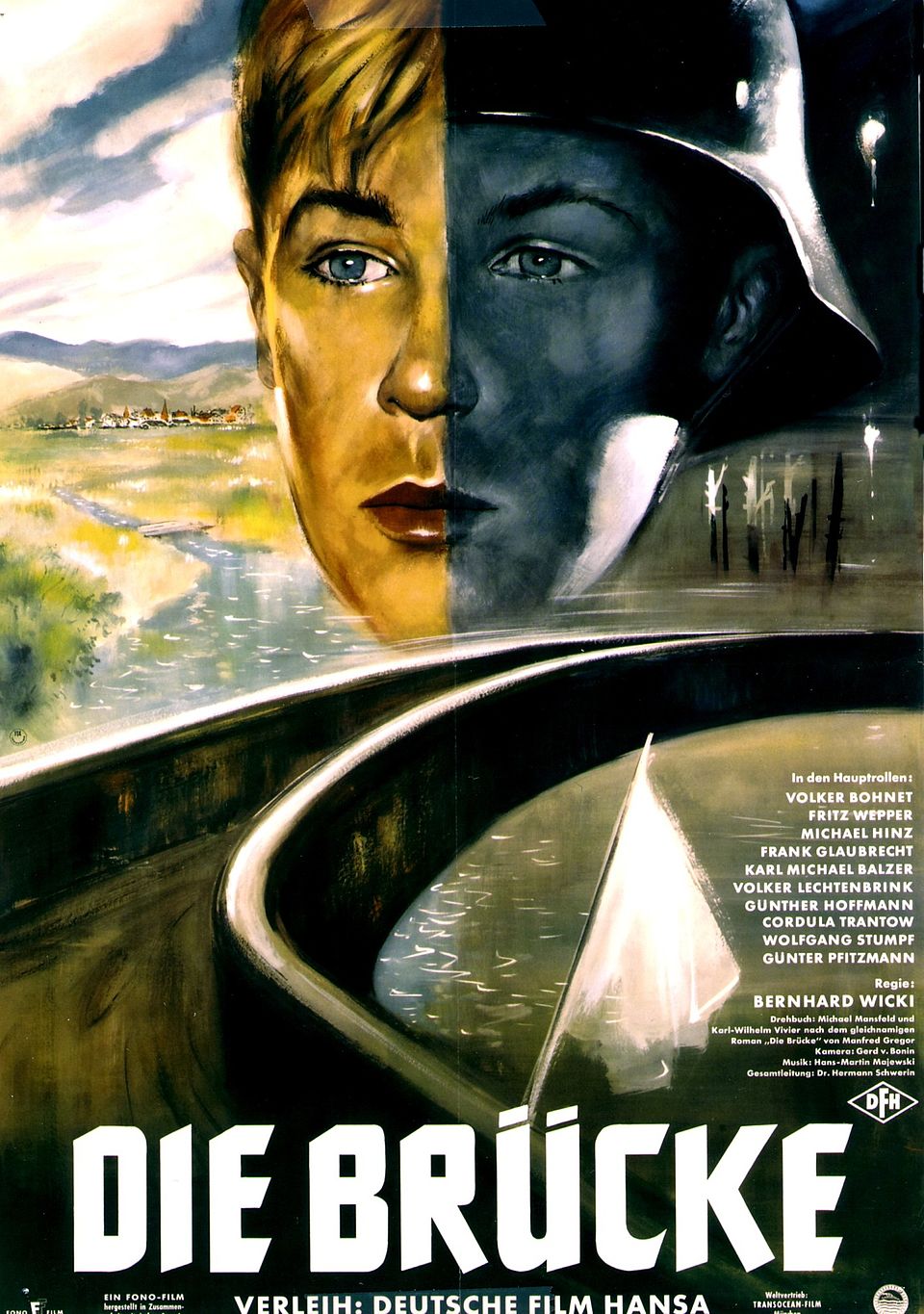
In the annals of cinematic history, few films capture the raw, devastating futility of war with the poignant intensity of Die Brücke (1959): West Germany's Powerful Anti-War Classic. Directed by the Austrian filmmaker Bernhard Wicki, this seminal anti-war masterpiece, often known simply as "The Bridge," plunges viewers into the heart-wrenching true story of adolescent boys thrown into the maelstrom of World War II's final, desperate days. Based on Gregor Dorfmeister's 1958 novel, the film is not merely a dramatization but a chilling echo of real events, drawn from the personal testimony of a veteran who lived through a similar ordeal as a youth. For anyone exploring the depths of WWII cinema or searching for a truly impactful story, understanding the genesis and enduring power of the die brucke film is essential.
The Historical Heartbeat Behind The Bridge
The inspiration for the die brucke film stems from a deeply personal and harrowing account. Journalist and writer Gregor Dorfmeister, under the pseudonym Manfred Gregor, penned the novel that would become the foundation for Wicki's cinematic achievement. Dorfmeister's narrative was not a work of pure fiction but was firmly rooted in an actual event, drawing directly from the experiences of a survivor who, as a young man, was thrust into an almost identical, tragic situation during the waning months of World War II. This grounding in reality imbues both the novel and the film with an unsettling authenticity that few war narratives achieve.
The release of the die brucke film in 1959 was particularly timely and significant for West Germany. Only a few years prior, in 1955, the Bundeswehr (the unified armed forces of West Germany) had been re-established, with conscription resuming in 1956. This societal shift meant that a generation of young men, many barely older than the film's protagonists, were once again facing military service. The film served as a stark, introspective look at the human cost of conflict, especially when it preys on the innocent and unprepared. It was a powerful statement for a nation grappling with its recent past and navigating its future role in a fragile peace. The film's critical reception was stellar, earning numerous international accolades, including the Golden Globe Award for Best Foreign Language Film and the National Board of Review Award for Best Foreign Language Film, cementing its status as a timeless classic.
The narrative bravely confronts the theme of Nazi Germany's ultimate defeat, a topic that many other German films of the era shied away from. It meticulously portrays the atmosphere of an unspecified small German town, where the war, initially a distant rumble, gradually encroaches upon daily life. The casual observations of bomb craters and the discussions of hardship give way to a far more immediate and terrifying reality, illustrating how quickly the veneer of normalcy can shatter when the front lines approach. For a deeper dive into its historical context, consider The Bridge: An Award-Winning Look at Nazi Germany's End.
Innocent Heroes: The Narrative Arc of Die Brücke (1959)
At the core of the die brucke film is the story of seven 15-year-old boys. Their days are initially filled with the carefree innocence of youth – school, play, and the guidance of a conscientious teacher who fosters their learning and communal projects. They are taught languages, build a boat together, and exist in a world where war is a concept rather than an imminent threat. This idyllic portrayal makes their subsequent conscription all the more jarring. When their draft notices arrive, the boys, imbued with a naive sense of adventure and nationalistic fervor, believe they are embarking on a grand, heroic journey. Their teacher, however, is visibly shaken, understanding the grim reality that awaits them.
The boys' parents, too, are caught in a vortex of fear and despair. Some desperately attempt to send their sons away to relatives, hoping to shield them from the inevitable. Personal dramas unfold against the backdrop of impending doom: one boy discovers his love interest is involved with his own father, fueling a poignant argument on the eve of his departure, where he bitterly claims happiness at leaving behind the familial betrayal. Even within the party structures of the time, represented by a town's Party leader father, there's a scramble for personal safety over ideological conviction, underscoring the breakdown of societal order.
Their hasty military training is depicted with a chilling blend of boyish camaraderie and burgeoning fear. They help each other through drills, revealing distinct personalities: the officer candidate from a lineage of military men, the ardent fanatic zealous for the Fatherland, and the more worldly boy with an eye for life's pleasures. Through a special favor arranged by their teacher, they are placed under the command of a veteran soldier who understands their youth and vulnerability. However, this protective arrangement is shattered as the American front advances rapidly towards their village. The boys are deployed to defend a strategically insignificant bridge over a river – a bridge that is paradoxically slated to be blown up by a demolition squad after the retreating German army has crossed. The inherent futility and senselessness of their mission are recognized and questioned by several of their superior officers, yet the orders stand.
Fueled by a cocktail of indoctrinated patriotism, youthful bravado, and a potent sense of duty, the boys eagerly embrace their assignment. They transform their old treehouse into a lookout, blending the innocence of childhood play with the grim realities of war. The film masterfully builds tension, showcasing how ideological fervor, combined with the lack of genuine military experience, sets these young individuals on a collision course with tragedy. The brutal realities of combat swiftly replace their romanticized notions of heroism, forcing them to confront unimaginable horrors and make impossible choices. The narrative powerfully demonstrates how quickly the light of innocence can be extinguished under the shadow of conflict.
A Timeless Anti-War Cry: Why The Bridge Resonates Today
Bernhard Wicki's Die Brücke (1959): West Germany's Powerful Anti-War Classic stands as a towering achievement in anti-war cinema, often cited by film critics in their top ten lists of the genre. Its enduring relevance lies not just in its meticulous historical recreation but in its universal message about the senselessness of sacrifice, particularly when it involves the young and unseasoned. The film doesn't preach; it shows. It exposes the devastating consequences of nationalistic propaganda and the desperate acts of a collapsing regime, which ultimately sacrifice its own children.
The film's impact extends far beyond its initial release. In a world that continues to grapple with conflicts, the themes explored in the die brucke film remain chillingly pertinent. The blind adherence to authority, the manipulation of youth, and the tragic waste of human potential are all sadly recurrent motifs in global history. The movie serves as a powerful reminder of the imperative to question, to seek truth, and to resist narratives that glorify violence without acknowledging its true cost.
Consider the modern echoes: discussions about collective good, individual liberties, and the dangers of misinformation can find a strange parallel in the boys' story. The "sheer ignorance of things people say now in 'defense'" of avoiding civic duties, as one observer noted in relation to the film, reflects a persistent human challenge: understanding the greater good, especially when an enemy is unseen or its threat downplayed. The boys' initial ignorance of war's true nature, contrasted with their brutal awakening, offers a timeless lesson about the perils of uninformed decision-making, whether on a battlefield or in a public health crisis.
The direction by Bernhard Wicki is often lauded for its raw realism and unsparing portrayal of combat. He meticulously crafts an atmosphere that shifts from pastoral innocence to claustrophobic terror, using cinematic techniques to amplify the emotional toll on the young protagonists. The film avoids grandiosity, focusing instead on the intimate horror experienced by individual soldiers, making their plight deeply personal and universally relatable. This approach ensures that the impact of The Bridge: An Award-Winning Look at Nazi Germany's End transcends time, continuously provoking thought and emotion in new generations of viewers.
In essence, the die brucke film is more than just a historical account; it is a profound humanistic statement. It compels us to reflect on the nature of war, the corrupting influence of power, and the profound tragedy of lost youth. Its legacy is a testament to the power of cinema to confront uncomfortable truths, provoke empathy, and serve as a perpetual warning against the cyclical nature of human conflict.
Conclusion: Die Brücke is an uncompromising and deeply moving exploration of the final, desperate acts of a collapsing regime, and the devastating impact on its youngest, most vulnerable citizens. Bernhard Wicki's brilliant direction, combined with a story rooted in true events, creates a powerful anti-war film that has resonated globally for over six decades. Its unflinching depiction of lost innocence and the futility of conflict continues to serve as a crucial cinematic document and a stark reminder of the enduring human cost of war. For anyone seeking to understand the psychological and moral dimensions of WWII, or simply desiring a profoundly affecting cinematic experience, the die brucke film remains an indispensable watch, its message as relevant and urgent today as it was upon its groundbreaking release.